
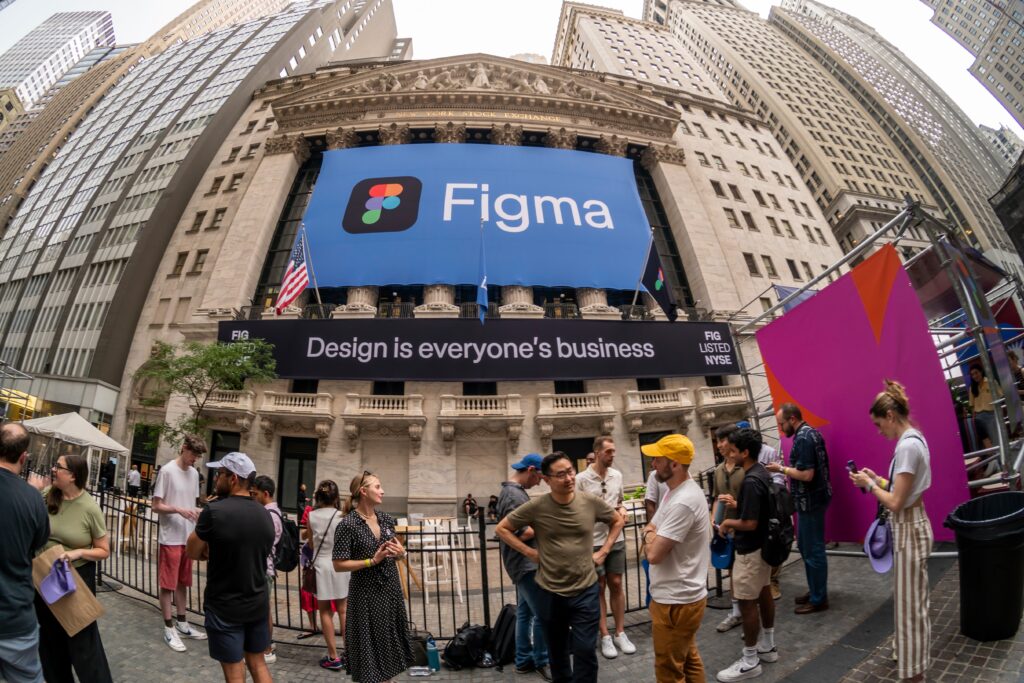


Figma’s fourth-quarter results, released Wednesday after the market closed, gave the struggling design-software company a chance to change its disappointing post-IPO story. Investors reacted with early enthusiasm.
Revenue rose 40% from last year to $303.8 million, beating the expected $293 million. Adjusted profit was $43 million, or 8 cents per share, topping Wall Street’s $35 million estimate. Figma also gave first-quarter and full-year 2026 guidance above analyst forecasts. Shares jumped 15% after hours.
However, there is an important caveat to these headline numbers. Using standard accounting rules, Figma reported a loss of $226.6 million, which was larger than expected. This loss reflects significant stock-based compensation from its July listing and other charges not included in the adjusted results.
These earnings come at a key time for Figma. The company’s debut was impressive, with shares jumping 250% on the first day. But since then, things have changed. The stock is down nearly 35% this year, now trading below its $33 offering price and more than 80% below its peak the day after the IPO. The company’s market value is now about $12 billion, much less than the $20 billion valuation from a failed acquisition attempt.
Artificial intelligence is both a big risk and a major opportunity for Figma. The company is working hard to benefit from the AI trend, announcing partnerships with top model developers like Anthropic and other major AI platforms. The chief financial officer noted a net dollar retention rate of 136%, showing that enterprise customers are using Figma more. He also pointed out that more large clients are adopting Figma’s AI-powered design tools, which is helping drive growth.
These numbers may help reassure a market that is generally skeptical about software valuations. The sector has been under pressure as investors wonder if AI will reduce demand for established productivity tools. A company that once planned to buy Figma has also seen its shares drop more than 25% this year, suggesting these challenges affect the whole industry, not just Figma.
The valuation debate remains unresolved. Even after the recent pullback, Figma trades at roughly 90 times forward earnings estimates—a premium that leaves little room for error. Analyst sentiment reflects that caution: of the 12 covering the stock, only 3 carry buy ratings, while 8 recommend holding and 1 advises selling.
Competition adds another layer of complexity. Canva, a private design platform with significant enterprise ambitions, is widely expected to pursue a public offering this year, potentially intensifying competition in Figma’s core market.
Still, for a company that has had trouble gaining momentum since its IPO, a quarter with faster revenue growth and better-than-expected guidance is a positive sign. It could mark the start of a stronger investment case.