
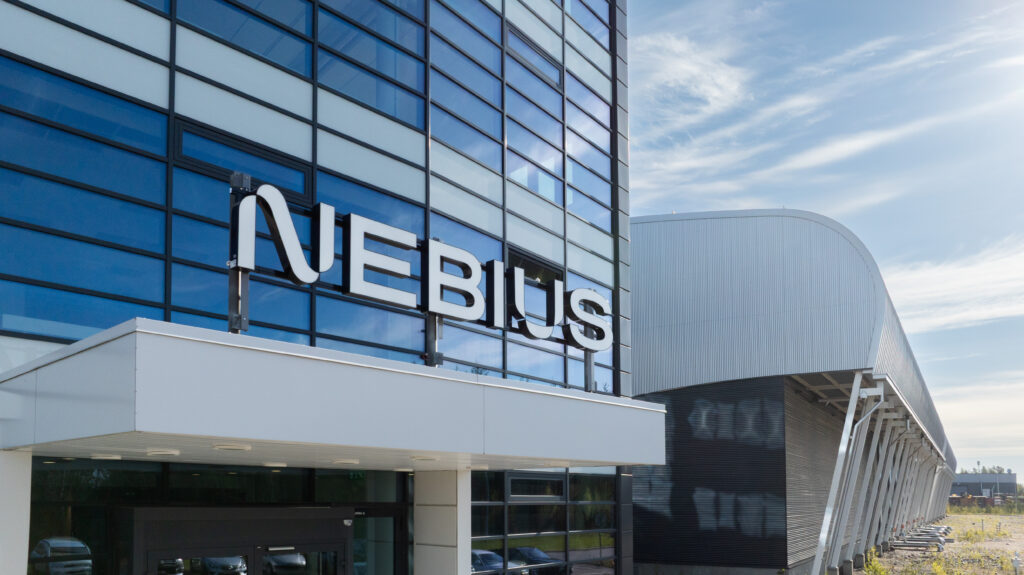


Nebius Group N.V. will announce its fourth-quarter 2025 financial results on February 12 before the market opens. The Amsterdam-based AI infrastructure company is under investor scrutiny as it pursues rapid expansion while dealing with rising costs and growing competition.
Analysts expect a loss of 44 cents per share for the quarter, but estimates have increased sharply in the past month. Revenue is projected at $232.2 million as the company grows its specialized AI cloud platform.
Strategic Positioning in AI Infrastructure
Nebius runs an AI-powered cloud platform designed for demanding AI and machine learning tasks, using both its own and shared data centers. Recent launches include the Aether 3.0 cloud platform and Nebius Token Factory, which helps run open-source models at scale.
In December 2025, the company unveiled Nebius AI Cloud 3.1, its latest full-stack platform iteration. The deployment extends to advanced hardware partnerships, including plans to integrate the Rubin platform starting in the second half of 2026. As a Cloud Partner and Exemplar Cloud Partner, Nebius will be among the first AI cloud providers globally to offer Vera Rubin NVL72, delivering advanced capabilities to customers in the United States and Europe.
Expansion Momentum
Nebius is pursuing an aggressive data center expansion strategy, prioritizing power capacity acquisition ahead of deployment. The company launched facilities in Israel featuring B200 GPUs and in the U.K. with B300s, with substantial capacity presold before opening. Additional phases in Finland commenced in the fourth quarter, also with advance commitments.
For 2026, expansion plans encompass existing footprints in the U.K., Israel, and New Jersey, as well as new facilities across the United States and Europe, scheduled for first-half commissioning. The company raised its contracted power target to 2.5 gigawatts by 2026 from an earlier 1 gigawatt projection. By year-end 2026, Nebius anticipates 800 megawatts to 1 gigawatt of fully connected capacity operational.
Revenue Drivers and Strategic Partnerships
The company maintains momentum with AI-native startups, positioning these relationships as fundamental to long-term growth. This strategy is reinforced by substantial enterprise agreements, including multi-billion-dollar arrangements with major technology companies, with contract values ranging from $17.4 billion to $19.4 billion with one partner and up to $3 billion with another.
Management indicated contributions from major contracts commenced in the fourth quarter of 2025, with revenue acceleration expected through 2026. The company remains on track to exit 2025 with annual recurring revenue of $900 million to $1.1 billion.
Financial Pressures and Operational Challenges
The company navigates macroeconomic uncertainty alongside rising operating expenses and substantial capital deployment. Capital expenditure projections increased from approximately $2 billion to about $5 billion for 2025, potentially pressuring fourth-quarter profitability.
Supply constraints and data center delays continue to limit capacity availability. While contracts remain intact, management reduced its 2025 revenue outlook to $5.05 billion to $5.15 billion from $5.15 billion to $5.35 billion.
Management tightened its 2025 group revenue guidance to $500 million to $550 million from a previous range of $450 million to $630 million. Although the company anticipates adjusted EBITDA turning slightly positive at the group level by year-end 2025, full-year results will remain negative.
Competitive Landscape
The company operates in a supply-constrained AI infrastructure market where GPU capacity demand substantially exceeds available power and data center readiness. However, competition from established cloud providers and specialized AI infrastructure companies remains substantial. The competitive environment poses ongoing challenges as multiple players pursue similar expansion strategies in the rapidly evolving AI infrastructure sector.