
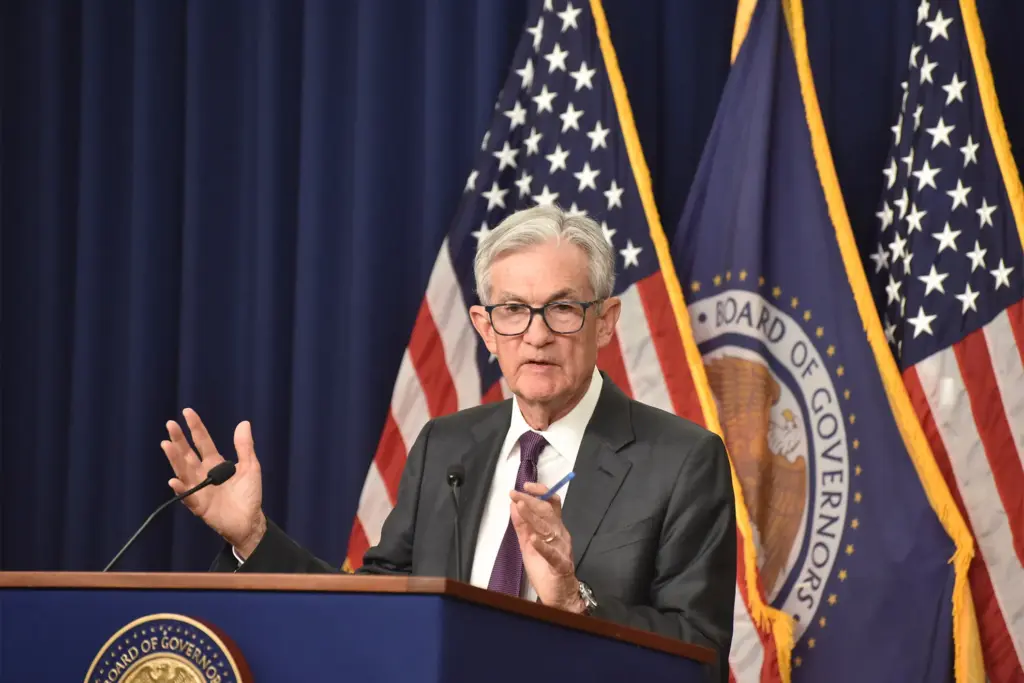


Chair Jerome Powell used last week’s policy meeting to warn investors against treating a December move as a foregone conclusion. Even so, policymakers were widely expected to trim the benchmark rate by another quarter point on Wednesday, marking the third cut of the year and bringing the federal funds range down to 3.50%–3.75%. The Fed will release fresh economic projections later in the day—guidance Wall Street hopes will clarify how much easing officials see as appropriate through 2026.
The outlook is increasingly contested. Some officials argue cooling economic conditions leave room for additional cuts over the next two years. Others worry that easing too quickly could reignite inflation, and point to the Fed’s September projections, which penciled in just one cut in 2026. That stands in contrast to trader expectations for a deeper easing cycle and underscores widening divisions inside the committee.
Economists expect policymakers to signal only modest adjustments this week—far short of the multi-cut path investors had hoped for earlier this year. Internal disagreements over the near-term path remain. Kansas City Fed President Jeff Schmidt dissented against November’s move, pushing for a pause, while several other officials have expressed unease about acting without the October and November employment and inflation data that were delayed by the federal government shutdown. Presidents from the St. Louis, Chicago and Boston Feds have all emphasized a need for caution in the absence of the usual data inputs, raising the likelihood of additional dissenting votes in December.
The broader committee still leans toward further easing, pointing to a cooling labor market—rising unemployment, declining job openings and wage growth that has flattened alongside stalled real personal income since the spring. But hawkish voices highlight countervailing signals: equity indexes near records, tight corporate credit spreads, above-trend GDP growth and wage gains still running hotter than the Fed’s comfort zone. With inflation only recently stabilizing after several years of overshooting, some officials worry that lowering rates too aggressively could jeopardize progress.
This week’s updated projections and the vote tally will offer investors a clearer read on the committee’s fault lines. A narrow set of dissents would suggest officials view the December move as precautionary rather than the start of a broader cycle. Many policymakers appear inclined to wait until March to make any firmer commitments, allowing time to assess winter hiring, spending and inflation trends.
Investors will be watching Powell’s press conference for signals on how the Fed is weighing limited data, rising policy uncertainty and the balance between maintaining a hawkish posture and acknowledging cooling conditions. The guidance could shape expectations not just for January, but for the trajectory of monetary policy well into next year.