
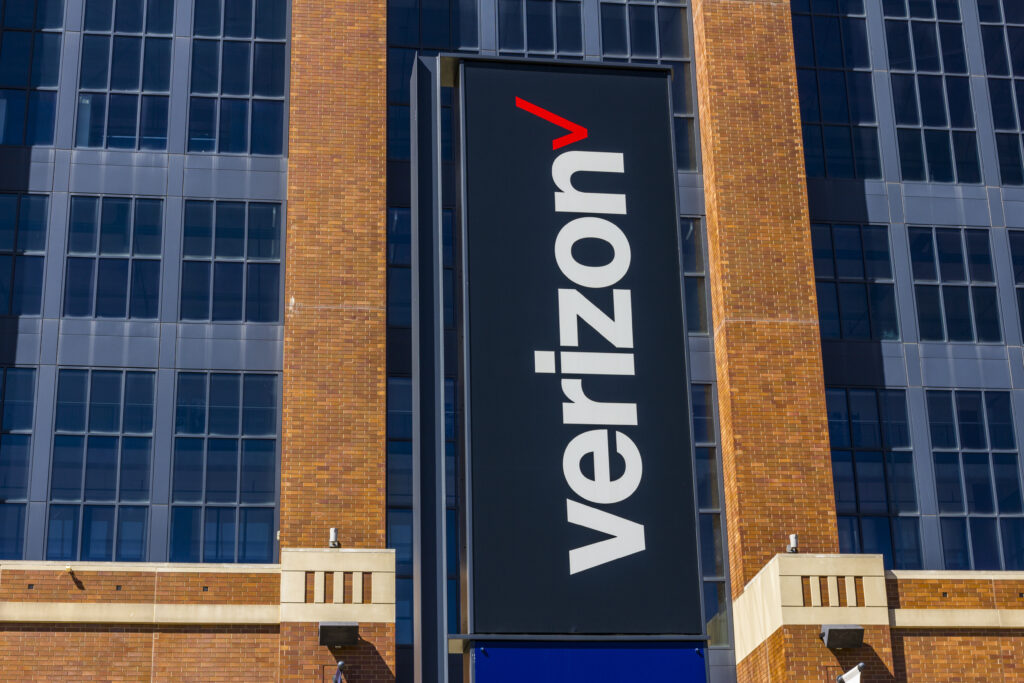


The telecom giant posted stronger-than-anticipated fourth-quarter results, driving shares higher in Friday trading as investors welcomed strong customer additions that outpaced both analyst estimates and prior-year performance.
The wireless carrier reported adjusted earnings of $1.09 per share on revenue of $36.4 billion, surpassing Wall Street expectations of $1.05 per share in profit and $36.1 billion in revenue, according to analyst consensus compiled by FactSet.
The notable metric was postpaid phone subscriber additions, with the company adding 616,000 new customers during the quarter. The figure significantly exceeded the 417,000 analysts had expected and marked an improvement over the 504,000 subscribers added in the year-earlier period. The company’s postpaid churn rate—a key measure of customer retention—held steady at 1.3%.
Shares climbed 3.9% in premarket trading on Friday, even as wider market futures pointed to a lower open, with contracts tied to the benchmark index down 0.5%. The stock had underperformed major indexes heading into the results, declining 2.3% year-to-date and posting just 1.1% gains over the past twelve months, compared with advances of 1.8% and nearly 15%, respectively, for the wider market.
Conspicuously absent from the quarterly figures was any accounting for the $20 rebates the company pledged to customers following a widespread service disruption in mid-January. If extended to all of its approximately 32 million consumer postpaid wireless accounts, the credits would amount to a one-time charge of approximately $650 million.
The results arrive shortly after a rival telecommunications provider delivered its own quarterly report, which similarly exceeded consensus expectations despite adding fewer postpaid customers than anticipated. That competitor posted a lower-than-expected churn rate, offering another data point suggesting stabilization inside the competitive wireless landscape.
The strong subscriber metrics from both carriers may signal renewed momentum in an industry that has encountered intense competition and market saturation in recent years, though investors will be closely observing to see whether growth can be sustained without aggressive promotional activity that pressures margins.